How Fashion Sustainability Is Changing The Industry begins with a difficult question: can fashion grow without exhausting people and the planet? The answer is still developing. However, brands are changing how they design, produce, sell, and recover clothing. Organic cotton, recycled polyester, low-impact dyes, and digital product passports now appear in industry discussions. Behind these terms are real choices, such as reducing water use in denim factories or extending a jacket’s life through repair services.
Orsola de Castro, co-founder of Fashion Revolution, said, “The most sustainable garment is the one already in your wardrobe.” Her statement shifts attention from constant purchasing toward durability, care, and reuse. It also challenges brands to explain where materials come from and who made each garment. Reliable sustainability claims require traceable suppliers, measurable emissions data, and independent verification. Green language alone is not enough.
The industry is making progress, but the picture remains imperfect. Recycled fibers can still shed microfibers. Shipping, packaging, and unsold stock continue to create pressure. Some small labels lead through local production, while larger companies invest in renewable energy and take-back programs. Results vary widely. Consumers also face confusing labels and higher prices. This article examines how fashion sustainability is changing the industry through materials, circular design, supply-chain transparency, labor responsibility, and smarter consumption. The goal is not to present fashion as solved. It is to show where practical change is visible, where evidence remains limited, and what still requires honest reflection.
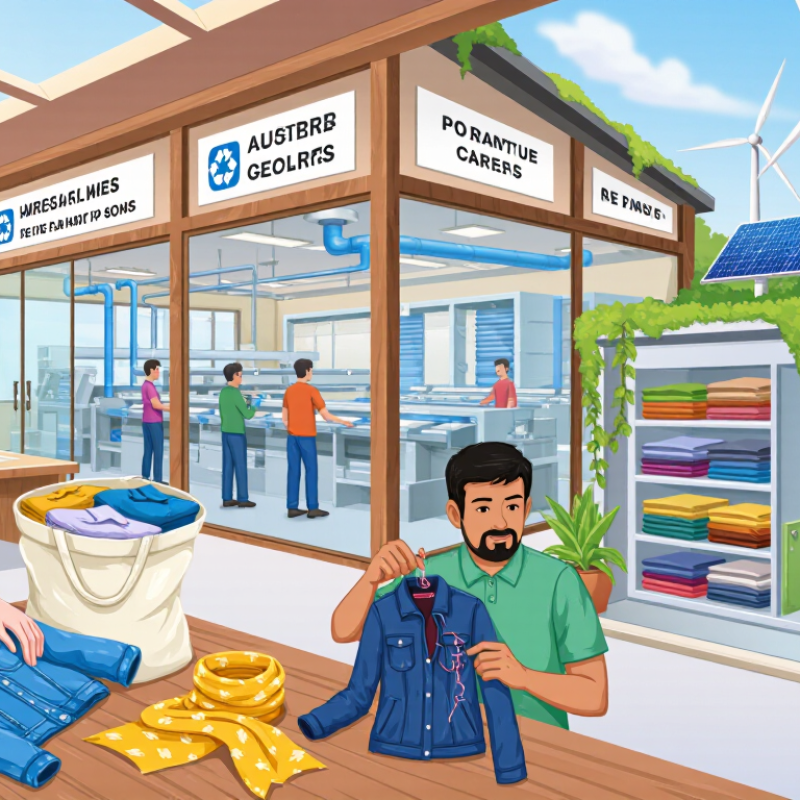
Fashion sustainability means reducing harm across a garment’s full life cycle. It includes fibre production, design, dyeing, manufacturing, transport, use, repair, and disposal. Social conditions matter too, including fair wages, workplace safety, and worker dignity.
The scope is wider than using recycled fabric. The Textile Exchange Materials Market Report 2024 estimated global fibre production at 132 million tonnes in 2023. It could reach 160 million tonnes by 2030. That growth increases pressure on land, energy, water, and waste systems. UNEP reports that textiles create 2–8% of global greenhouse gas emissions and consume around 215 trillion litres of water each year. The figures are difficult to picture. Imagine filling millions of household bathtubs.
Sustainability also asks how long clothing remains useful. Durable construction, repair access, resale, and responsible recycling all matter. The Ellen MacArthur Foundation has reported that one truckload of textiles is landfilled or burned every second. Still, recycled content alone cannot solve overproduction. A recycled garment may use less virgin material, yet it can still be worn rarely and discarded quickly. The definition remains practical, but not perfect. It should measure real impacts, not only attractive claims. Textile sustainability needs transparent data, independent assessment, and honest attention to trade-offs.
| Change Area | Definition and Scope | Global Indicator or Data Point | How It Is Changing the Industry | Practical Sustainability Response | Evidence and Reference |
|---|---|---|---|---|---|
| Climate Impact Reduction | Measures the greenhouse-gas emissions generated across raw-material production, textile processing, manufacturing, distribution, use, and end-of-life. | Approximately 2%–8% of global greenhouse-gas emissions | Climate performance is becoming a product and supply-chain requirement rather than a voluntary marketing topic. | Use renewable energy, improve energy efficiency, reduce production waste, and measure emissions across Scopes 1, 2, and 3. | United Nations Environment Programme, 2023; estimate varies by methodology and system boundary. |
| Water Stewardship | Covers freshwater withdrawal, water consumption, wastewater quality, and water pollution associated with fiber production and wet processing. | About 93 billion cubic meters of water used annually | Water risk is shifting sourcing decisions toward lower-impact fibers, closed-loop processes, and facilities with stronger wastewater controls. | Adopt water-efficient dyeing and finishing, treat wastewater, reuse process water, and prioritize sourcing in regions with lower water stress. | Ellen MacArthur Foundation, A New Textiles Economy, 2017; global estimate. |
| Textile Waste and Circularity | Includes discarded clothing, factory off-cuts, unsold inventory, reuse, repair, recycling, landfill, and incineration. | Approximately 92 million tonnes of textile waste generated globally each year | The industry is moving from a linear “take–make–dispose” model toward systems based on durability, reuse, repair, resale, and fiber recovery. | Design for longer use, improve cutting efficiency, create take-back systems, and scale mechanical or chemical recycling where technically suitable. | Ellen MacArthur Foundation, A New Textiles Economy, 2017. |
| Fiber-to-Fiber Recycling | Refers to recycling used textiles into new textile fibers rather than downcycling them into insulation, wipes, or other lower-value materials. | Less than 1% of clothing material is recycled into new clothing | Material selection, garment construction, labeling, and sorting technologies are becoming central to future circular business models. | Reduce blended-fiber complexity, avoid unnecessary finishes, use recyclable trims, and improve collection and automated sorting infrastructure. | Ellen MacArthur Foundation, A New Textiles Economy, 2017. |
| Product Durability and Utilization | Focuses on how long garments remain functional and how frequently they are worn before disposal or replacement. | Global clothing utilization decreased by approximately 36% compared with 15 years earlier | Durability, timeless design, repairability, and emotional value are becoming measurable sustainability attributes. | Improve construction quality, publish care guidance, provide repair services, and design garments for repeated use across multiple seasons. | Ellen MacArthur Foundation, A New Textiles Economy, 2017. |
| Microfiber Pollution | Addresses microscopic fibers released during textile production, washing, drying, wearing, and disposal, especially from synthetic materials. | Synthetic textiles were estimated to contribute about 35% of primary microplastics entering the oceans | Fiber-shedding performance is becoming part of material research, washing guidance, filtration development, and product regulation. | Use lower-shedding yarns and constructions, improve fabric finishing, develop washing filters, and evaluate microfiber release during product testing. | International Union for Conservation of Nature, Primary Microplastics in the Oceans, 2017; estimate concerns primary microplastics. |
| Safer Chemistry | Covers the management of dyes, solvents, finishing agents, water pollutants, and hazardous chemicals across the textile supply chain. | Chemical impacts are concentrated in fiber processing, dyeing, printing, finishing, and wastewater management | Restricted-substance controls are expanding into chemical transparency, wastewater verification, and safer chemistry innovation. | Maintain chemical inventories, substitute hazardous substances, test wastewater, and apply the principles of safer chemical design. | United Nations Environment Programme and International Labour Organization guidance on sustainable textile value chains. |
| Traceability and Transparency | Tracks the origin, processing location, material composition, environmental performance, and social conditions of products and components. | Traceability is increasingly required across multiple supply-chain tiers | Digital records, supplier mapping, chain-of-custody systems, and product-level data are replacing unsupported sustainability claims. | Map suppliers beyond the first tier, standardize data collection, verify claims independently, and use interoperable product information systems. | OECD, Due Diligence Guidance for Responsible Supply Chains in the Garment and Footwear Sector, 2018. |
| Extended Producer Responsibility | Places responsibility for the collection, sorting, reuse, recycling, and treatment of products at the post-consumer stage on producers and the wider value chain. | The European Union requires separate collection of textiles by 2025 | Waste management is becoming a designed part of the product lifecycle, with stronger incentives for recyclable and durable garments. | Design collection systems, fund end-of-life infrastructure, report post-consumer outcomes, and use fees that reflect environmental performance. | European Union Waste Framework Directive, amended by Directive (EU) 2018/851. |
| Consumer Behavior and Responsible Use | Includes purchasing frequency, garment care, washing temperature, drying practices, repair, reuse, resale, and responsible disposal. | Washing and drying can contribute materially to a garment’s use-phase environmental footprint | Sustainability strategies increasingly address the full life of a garment rather than focusing only on factory production. | Promote cold washing, line drying, proper care, repair, resale, donation, and textile collection through clear consumer guidance. | European Environment Agency publications on textiles and environmental impacts; use-phase impact varies by fiber, behavior, and energy mix. |
It covers fibres, design, dyeing, sewing, transport, use, repair, and disposal. Worker safety and fair wages matter too.
Recycled fibres can reduce virgin material use. However, a rarely worn garment may still become waste quickly.
Global fibre production reached about 132 million tonnes in 2023. It may approach 160 million tonnes by 2030.
Textiles create roughly 2–8% of global greenhouse gas emissions. They use about 215 trillion litres of water yearly.
It identifies where fibres are grown, spun, dyed, and sewn. Digital records can connect farms with factories.
Small subcontractors may lack software, training, or reliable internet. Some gaps remain unclear, and that should be admitted.
Energy meters can locate high-use machines. Treated process water may be reused. Lower-temperature washing can reduce energy demand.
No. Certificates offer limited evidence, while scheduled audits can miss ordinary problems. Worker interviews and surprise checks provide stronger details.
Reports should show water, energy, waste, wages, failures, delays, and corrective actions. Attractive claims alone are not enough.
Durable stitching, accessible repairs, resale, and responsible recycling can extend garment life. Real behavior still matters most.
How Fashion Sustainability Is Changing The Industry is a broad transformation that considers the environmental, social, and economic effects of clothing throughout its entire life cycle. The industry is responding to concerns such as excessive waste, resource depletion, pollution, unsafe working conditions, and unfair treatment of workers. In response, designers and manufacturers are exploring circular design, recycled and renewable materials, longer-lasting products, repair services, and systems that reduce waste from production to disposal.
Greater supply chain transparency and cleaner production methods are also becoming essential. Improved traceability, responsible resource use, renewable energy, reduced water consumption, and safer working environments can help create a more accountable industry. At the same time, consumers are influencing change through thoughtful purchasing, product care, reuse, and secondhand choices. Regulation and emerging business models, including rental, resale, repair, and made-to-order production, are encouraging companies to focus less on rapid consumption and more on durability, responsibility, and long-term value.

 VORA Fashion